

The CIA Tried Using Mind Reading To Spy on the Soviets
Commenced in 1977, Project Stargate aimed to use clairvoyance and "remote viewing" to spy on their Cold War arch-nemesis.

Back in high school, I had this kooky classmate who claimed she could see people’s auras, perform energy healing and, spookiest of all, read minds. She considered herself a clairvoyant, AKA having the supposed ability to know things just by “seeing” them through her mind’s eye. In other words, she believed she could sense things and know stuff about people without ever talking to them. Although I found out she was somewhat of a pathological liar years after high school, she immediately came to mind when I learned the CIA was again resorting to eccentric methods to spy on their Cold War counterpart.

They say there’s a fine line between lunacy and brilliance, and the more I learn of the CIA’s history, the more that line becomes blurred. Having already covered Project Acoustic Kitty that attempted to turn cats into spying devices, I thought it couldn’t get crazier than that. But I was proven wrong. At this point, I’d probably have enough material for a full-blown series on forgotten CIA projects that, ultimately, led nowhere. But hey, one wacky project at a time!
Established in 1977 not only as a research project but also as a secret United States Army unit led by the Defense Intelligence Agency (DIA) and Stanford Research Institute (SRI), Project Stargate was among the CIA’s most ambitious espionage projects in its history. It had a number of precursors and sister-projects, and until 1991, it was known under various code names: “Gondola Wish”, “Grill Flame”, “Sun Streak” being only some. Four years before it was officially terminated, the project became known as "Stargate”.1
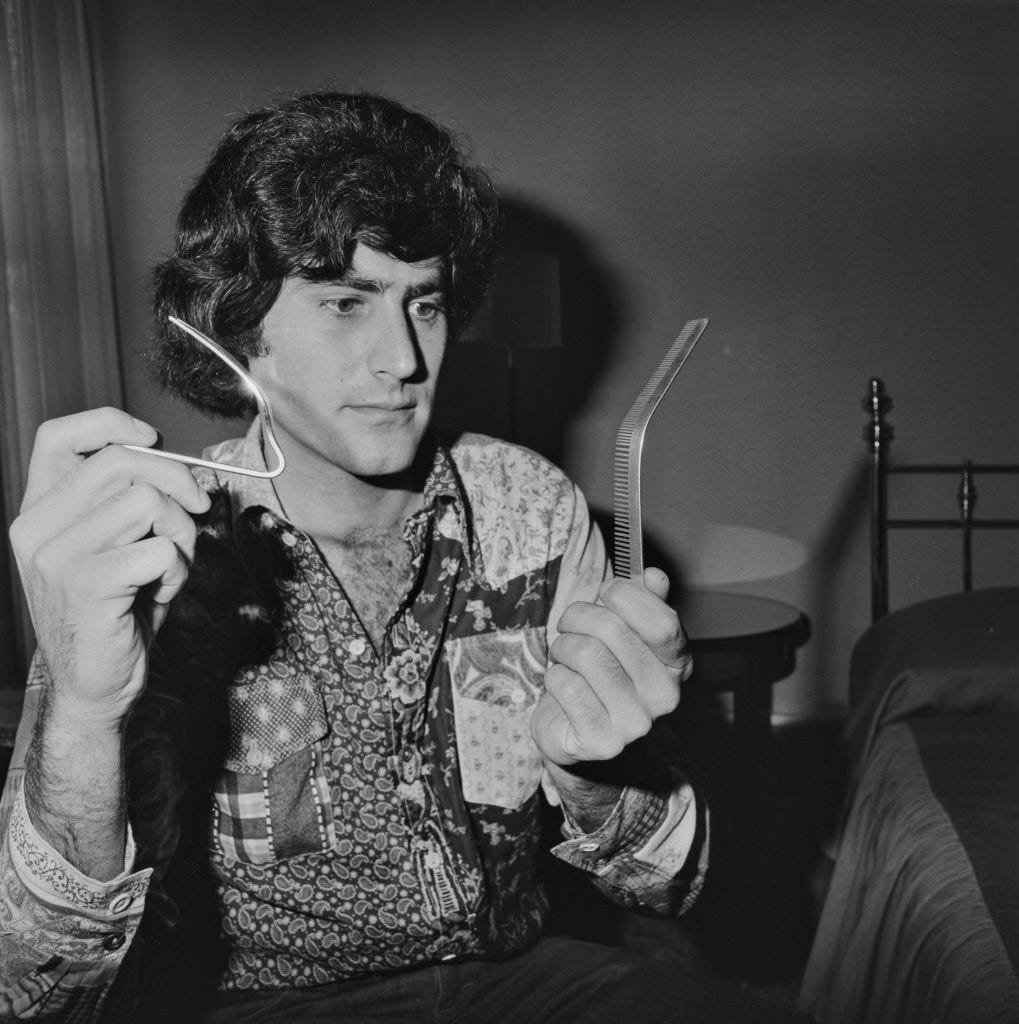
Already back in the mid-1960s, U.S. intelligence agencies claimed the Soviet Union was spending around $88 million annually on psychic research.2 Basically, the U.S. was scared of the potential that the Soviets would soon start reading their minds and using clairvoyance to always be one step ahead. So, at the height of the Cold War paranoia, the CIA started conducting a series of psychic research projects in hopes of beating the Soviets to it.
According to Joseph McMoneagle, a retired U.S. Army Chief Warrant Officer and a Project Stargate researcher, Stargate aimed to make the research of clairvoyance, mind reading and out-of-body experiences more grounded in science, with minimal margin for error and inaccuracies. Eventually, the project started focusing mainly on “remote viewing”, the practice of describing distant or hidden objects/targets without relying on the five senses, but by seeing/sensing them with one’s mind.3
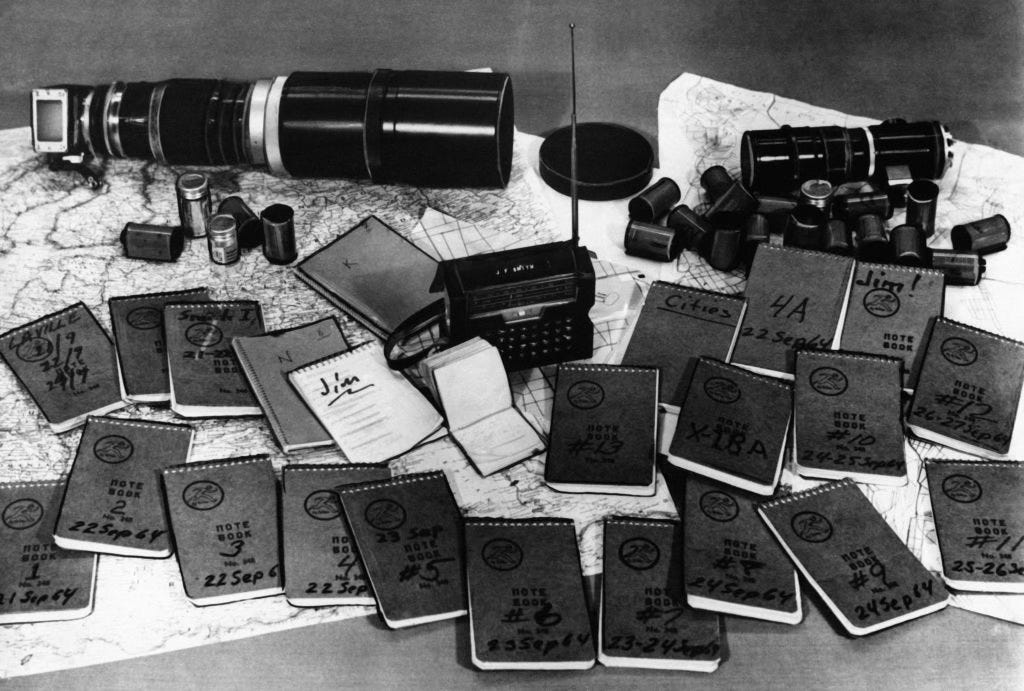
As crazy as it sounds, Stargate’s precursor SCANATE (“scan by coordinate”) was able to successfully locate the lost Soviet spy plane in 1976. It was Rosemary Smith, a young administrative assistant recruited by project director Dale Graff, who saw the plane’s location in her mind’s eye4. According to George Stephanopoulos’ 2024 book The Situation Room, President Jimmy Carter, desperate from the Iran hostage crisis, brought in Jake Stewart, expert in clairvoyance, on May 8, 1980, to help them locate the hostages. Interestingly, Stewart successfully located Richard Queen, one of the hostages, but the rest were released only following Reagan’s inauguration.5
Although the project did produce some results, the millions of dollars the CIA directed towards it for nearly twenty years were basically going to waste. Towards the end of the project, it has been reported that the project began experimenting with tarot cards and their “prediction accuracy.” Joseph McMoneagle disclosed that Stargate and its unorthodox methods would be used only if “every other intelligence attempt, method, or approach had already been exhausted”.6 So, it’s safe to say it was used sparingly and it was mostly kept under wraps.

By 1995, the DIA dipped out and the project was fully led by the CIA, now desperate to put an end to it and move on. Before it was officially concluded, The CIA commissioned a report by the American Institutes for Research (AIR) that came to the conclusion that clairvoyance and remote viewing haven’t been proven to work as psychic abilities and weren’t actually used in real operations.7 This ultimately resulted in the CIA terminating the $20 million project and declassifying it.
Even though the project remains yet another weird attempt by the CIA to spy on the Soviets, it helped popularise the idea that governments and intelligence services might be working towards using mind reading and clairvoyance to control their subjects. In fact, the hit-series Stranger Things was, according to the Duffer brothers, the series creators, heavily inspired by Project Stargate.8 The X-Files are also a great example of art imitating life because in this case, real life was far more unbelievable than anything any screenwriter might’ve come up with.

Project Stargate nowadays occupies this interspace between “wait, this can’t be real” and “the CIA was both ahead of its time and absolutely deranged”. It shows what happens when you mix extreme paranoia, research grounded in science and speculative belief. You get an intelligence project that doesn't sound real, and one that has undoubtably negatively impacted the CIA’s reputation, whether due to dubious results it generated or due to the sheer madness of the initial idea of using mind reading as a spying technique. Because what serious, self-serving agency would come up with something like that?
And yet, here we are. This extremely expensive failed attempt at using one’s mind’s eye to gain strategic advantage against a national enemy garners fascination and interest culturally, even thirty-one years after its conclusion. And let me tell you something. Although I’m far from being a clairvoyant, I swear I can sense when certain things might happen. Call it intuition if you will, but whenever it appeared, it never failed me. So, worst case scenario, I can always apply for a job with the CIA. And seeing how successful their previous remote viewers were, I think I’d do just fine.

McMoneagle 1998, p. 21.
Jacobsen 2017, p. 337.
McMoneagle 1998, p.21.
Mumford, Rose, Goslin 1995, pp. 4-5.
It would be interesting to see how the organizations could use the con artists skills some of those individuals possessed, to their advantage. I’m curious if there were cases of that!
Super nice writing, I look forward to reading some of your other pieces. Warm greetings ☀️😊
The recent uptick in “remote viewing” on social media and alternative news platforms seems like a distraction to drive attention to failed endeavors and away from current technological and social capabilities